Green Gold from the Sea: How Seaweed Became the Ingredient American Home Cooks Can't Ignore
For a long time, seaweed in the American kitchen meant exactly one thing: the dark, papery sheet wrapped around your California roll. Maybe a tangle of slippery green stuff floating in miso soup at a Japanese restaurant. That was about the extent of it.
Not anymore.
Over the past few years, edible sea vegetables have made a serious push into mainstream American cooking. You'll find them at farmers' markets in coastal Maine, on the menus of farm-to-table restaurants in Nashville, and in the pantries of home cooks who've realized that the ocean has been growing some of the most flavorful, nutritious food on the planet — and we've barely been paying attention.
If you've been curious but aren't sure where to start, this guide is for you.
What Exactly Is a Sea Vegetable?
The term "seaweed" gets thrown around loosely, but it covers a huge range of marine algae with very different flavors, textures, and culinary uses. Think of it less like a single ingredient and more like a category — the way "mushroom" can mean anything from a delicate enoki to a meaty portobello.
For practical purposes, edible sea vegetables fall into three broad color groups: green, red, and brown. Each group has its own flavor profile and best uses, and knowing the difference will save you from a lot of culinary confusion.
The Lineup: Your Seaweed Cheat Sheet
Nori is where most Americans start, and for good reason. Those crisp, dark green sheets are endlessly useful beyond sushi. Crumble them over popcorn, use them as a wrap for rice bowls, or cut them into thin strips and toss them into a salad for a savory, slightly briny crunch. Nori has a mild, almost nutty flavor that plays well with butter, citrus, and sesame.
Wakame is the soft, silky seaweed you know from miso soup. It rehydrates quickly from a dried state and has a gentle sweetness that makes it incredibly approachable. Try it in a simple cucumber and rice vinegar salad — a classic Japanese preparation that comes together in about five minutes and works as a refreshing side dish at any summer cookout.
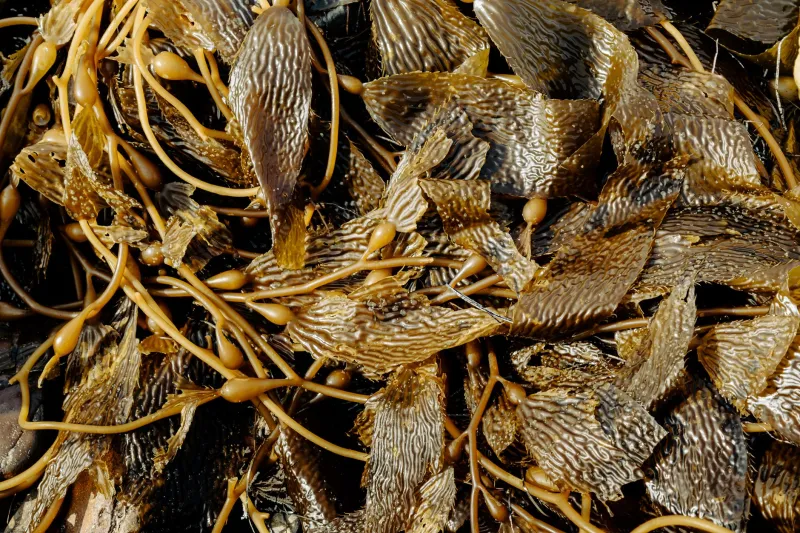
Kelp (also sold as kombu) is the heavy hitter of the sea vegetable world. It's the backbone of dashi, the Japanese stock that forms the foundation of so much of that cuisine's depth and umami. A single piece of dried kombu simmered in water for twenty minutes produces a broth that's light in color but profound in flavor. Beyond stocks, kelp can be sliced and added to bean dishes — it actually helps with digestibility — or pickled and served as a condiment alongside grilled fish.
Dulse is the one that tends to surprise people most. This red-purple seaweed from the North Atlantic has a smoky, almost bacon-like flavor when pan-fried in a little oil. It's been a staple in coastal Ireland and Canada for centuries, and American cooks are just now catching on. Use it as a garnish on chowders, fold it into scrambled eggs, or fry it up and crumble it over a baked potato. Yes, really.
Sea lettuce is bright green, delicate, and tastes genuinely like the ocean in the best possible way. It's beautiful fresh or lightly dried, and works well as a garnish on raw seafood dishes, in grain salads, or blended into compound butters.
Hijiki is a dark, earthy brown seaweed with a more robust, mineral flavor. It's traditionally simmered with soy sauce, mirin, and sesame oil in Japanese cooking, and that preparation — served at room temperature — is one of those side dishes that somehow gets better the longer it sits in your fridge.
Why Your Body Will Thank You
Sea vegetables aren't just interesting from a culinary standpoint — they're genuinely nutritious in ways that most land-based vegetables can't match. They're naturally rich in iodine, which is essential for thyroid function and something a lot of Americans are mildly deficient in. They contain vitamins B12, C, and K, along with iron, calcium, and magnesium.
Perhaps most interestingly, many sea vegetables contain a type of soluble fiber called fucoidan, which researchers are actively studying for its potential anti-inflammatory properties. They're also a source of omega-3 fatty acids — yes, from plants — which makes them particularly appealing for people reducing their meat intake.
That said, a word of caution: some seaweeds, particularly hijiki and certain kelp varieties, are very high in iodine. Eating them occasionally is totally fine, but if you're consuming large quantities daily, it's worth talking to your doctor, especially if you have a thyroid condition.
How to Source the Good Stuff
Quality matters here more than you might expect. Seaweed is highly absorbent, which means it picks up whatever is in its surrounding water. That's great when the water is clean and mineral-rich — not so great when it isn't.
When you're shopping, look for products that clearly state their origin. Wild-harvested seaweeds from the cold, clean waters of the Maine coast, the Pacific Northwest, or the North Atlantic (Iceland, Ireland, and Canada are all excellent sources) are generally your best bet. Certified organic labeling is a helpful indicator, though it's worth noting that organic certification for seaweed is still evolving as a standard.
At Salty's Reef Store, we prioritize sourcing sea vegetables from harvesters who practice sustainable wild harvesting — meaning they take only what the ecosystem can readily regenerate, leaving root systems intact and respecting natural growth cycles. This isn't just good ethics; it's good flavor. Seaweed harvested from thriving, well-managed populations simply tastes better.
Dried seaweeds are the most practical format for most home cooks. They have a long shelf life, take up almost no storage space, and rehydrate quickly. Store them in an airtight container away from light and moisture, and most varieties will keep for a year or more.
Three Simple Ways to Start Cooking with Seaweed Tonight
Kombu butter: Simmer a small piece of dried kombu in half a cup of water for fifteen minutes. Remove the kombu, reduce the liquid to a tablespoon or two, then whisk it into softened butter with a pinch of flaky sea salt. Spread it on crusty bread or melt it over grilled corn. It's quietly extraordinary.
Quick wakame salad: Soak two tablespoons of dried wakame in cold water for five minutes, then drain and squeeze dry. Toss with thinly sliced cucumber, a splash of rice vinegar, a teaspoon of sesame oil, and a pinch of sugar. Top with sesame seeds. Done.
Nori popcorn: Pop your corn however you like, then toss it with melted butter, crumbled nori sheets, and a little nutritional yeast if you have it. It tastes like the ocean decided to throw a movie night, and it is extremely good.
The Bigger Picture
There's something genuinely exciting about a food trend that's also a sustainability story. Seaweed requires no fresh water, no fertilizer, no arable land. It grows fast, absorbs carbon dioxide, and can actually improve the water quality around it. As American consumers become more thoughtful about where their food comes from and what its production costs the planet, sea vegetables check a lot of boxes.
But honestly? You don't need to lead with the sustainability pitch. Lead with the flavor. Lead with the way a piece of fried dulse makes a bowl of clam chowder taste like it came from somewhere specific and real. Lead with the way kombu transforms a pot of beans into something you'll want to eat for days.
The ocean has been growing good food for a very long time. We're just finally learning to pay attention.