Bottarga: The Ancient Pantry Staple That Makes Everything Taste Like a Five-Star Meal
There's a moment in a lot of home cooks' lives when they discover that one ingredient — the thing that explains why restaurant food tastes the way it does and theirs doesn't, even when they follow the recipe to the letter. For some people it's good olive oil. For others it's fish sauce, or a proper finishing salt. But if you haven't met bottarga yet, buckle up, because this is that ingredient.
Bottarga is, at its core, salted and pressed fish roe that's been dried until it forms a dense, waxy block. It sounds simple. It is simple. And yet the flavor it delivers is anything but — briny, rich, deeply savory, with a kind of oceanic intensity that builds slowly and lingers in the best possible way. A little goes a long way, and that's exactly what makes it such an exciting addition to your pantry.
A Quick History Lesson (Worth Knowing)
Bottarga has been around for a long time — we're talking centuries. The word itself traces back through Arabic and likely even ancient Egyptian food preservation traditions. In Sicily and Sardinia, where the modern Italian versions are most celebrated, it became a way to preserve the precious roe of mullet and tuna before refrigeration was a thing anyone had even imagined.
Fishermen and coastal communities found that by salting the roe sacs, pressing them flat, and then drying them in the open air, they could create something shelf-stable that also happened to taste extraordinary. What started as practical food preservation became a culinary tradition that's persisted for generations. Today, bottarga from Sardinia — especially the mullet roe variety — is considered a delicacy on par with good prosciutto or aged parmesan.
In the US, it's still flying under the radar for most home cooks. That's both a shame and, honestly, an opportunity.
Two Types, One Goal
When you're shopping for bottarga, you'll mainly encounter two varieties:
Bottarga di Muggine (mullet roe) is the gold standard for most applications. It's golden-amber in color, slightly more delicate in flavor, and the one you'll most often find grated over pasta or shaved paper-thin over toast. Sardinian mullet bottarga is widely regarded as the finest you can buy.
Bottarga di Tonno (bluefin or yellowfin tuna roe) is darker, more intensely flavored, and a little more aggressive on the palate. It's great if you want something with more punch, though it can overpower subtler dishes.
For most American home cooks just getting started, mullet bottarga is the friendlier entry point. The flavor is complex without being overwhelming, and it plays well with a wide range of ingredients.
How to Buy the Good Stuff
Bottarga comes in two forms: whole lobes (the dried roe sac, intact) and pre-grated powder or flakes. Both have their place, but if you can swing it, buying a whole lobe is worth it.
A whole lobe gives you more control — you can grate it fresh, shave it thin, or slice it depending on what you're making. It also keeps better once you have it. Look for a firm, uniform texture with no soft spots or cracking. The color should be consistent throughout, ranging from golden yellow to deep amber depending on the variety. Avoid anything that smells overly fishy or ammonia-like — good bottarga smells clean, oceanic, and savory.
Pre-grated bottarga is convenient and works great for stirring into sauces or finishing dishes where texture isn't the point. Just check the ingredient list: it should be roe and salt, full stop. No fillers, no weird additives.
Expect to pay somewhere in the $20–$60 range depending on the variety, origin, and quantity. Yes, that sounds like a lot. But a single lobe can last weeks in the fridge and flavors dozens of dishes. Per-serving, it's one of the most economical luxuries in the specialty food world.
What to Do With It (Beyond the Obvious Pasta)
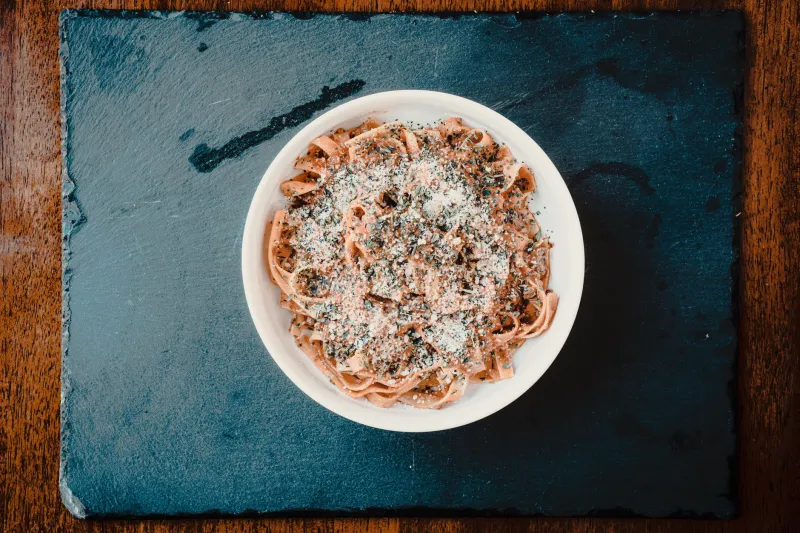
The classic Italian preparation — spaghetti with bottarga, olive oil, garlic, and a squeeze of lemon — is iconic for a reason. It's fast, it's stunning, and it will immediately make you understand why people love this ingredient. But stopping there would be like buying a great cast iron skillet and only making pancakes.
Here's where things get interesting:
On eggs. Scrambled eggs, soft-boiled eggs, a fried egg on toast — a little grated bottarga over any of these turns breakfast into something worth talking about. The richness of the yolk and the savory depth of the roe are a natural match.
Finishing butter. Grate bottarga into softened butter with a little lemon zest and you've got a compound butter that transforms grilled fish, roasted vegetables, or even a simple piece of toast into something that tastes like it came from a coastal Italian trattoria.
On raw vegetables and salads. Shaved thin over a fennel and citrus salad, or grated over roasted cauliflower, bottarga adds a layer of umami that makes vegetables taste more like themselves, only turned all the way up.
With avocado. Avocado toast is everywhere, and most versions are fine. Grate some bottarga over the top with a drizzle of good olive oil and you've got something that actually justifies the hype.
In dips and spreads. Stir grated bottarga into a simple white bean dip or blend it into a ricotta spread for a party appetizer that will have people asking what your secret is.
Over pizza. Add it after the pizza comes out of the oven — the residual heat is enough. It pairs especially well with a simple margherita or a white pizza with cream and garlic.
Storing It Right
Once you've got your hands on a whole lobe, wrap it tightly in plastic wrap or beeswax wrap and keep it in the fridge. It'll hold for several weeks without issue. Some people like to rub the cut end with a little olive oil before wrapping to keep it from drying out too aggressively.
Pre-grated bottarga should be kept in an airtight container in the fridge and used within a few weeks of opening.
Bottarga doesn't freeze particularly well — the texture gets a little off — so plan to use it regularly once you open it. Honestly, that won't be a problem.
The Bigger Picture
What makes bottarga worth adding to your pantry isn't just the flavor — it's the philosophy behind it. This is an ingredient built on the idea that nothing good should go to waste, that patience and salt and time can transform something humble into something magnificent. That's a pretty good way to think about cooking in general.
For home cooks who want to level up without spending hours on elaborate techniques, bottarga is one of the most direct routes there is. Grate it. Shave it. Stir it in. The ocean does the rest.
You can find quality bottarga right here at Salty's Reef Store — we source it carefully so you don't have to guess. Give it a try, and don't be surprised if it quietly becomes the ingredient you reach for more than almost anything else in your kitchen.