The Cut Your Fishmonger Is Practically Giving Away (And Why Chefs Are Obsessed With It)
There's a moment at most fish counters across America that happens dozens of times a day: a customer buys a nice fillet, the fishmonger trims the rest, and a gorgeous, gelatin-laced, deeply flavorful section of fish gets tossed in a scrap bin or sold for pennies. That section is the collar — and if you've never cooked one, you've been leaving some of the best eating in the whole fish on the table.
Fish collars aren't mysterious or exotic. They're simply the bony, meaty section that runs from just behind the gills down through the pectoral fin — essentially the "shoulder" of the fish. What makes them special is everything packed into that small area: layers of tender, loosely structured meat threaded with fat, connective tissue that melts into silk when cooked properly, and a richness that a lean center-cut fillet can rarely match. The Japanese have long celebrated them — hamachi kama (yellowtail collar) is a staple of izakaya menus — but American home cooks have largely missed the memo.
That's starting to change. Let's get you caught up.
Why the Collar Hits Different
Flavor in fish, like in most animals, tends to concentrate in the parts that work hardest. The collar sits at a structural crossroads — it connects the head to the body, supports the fins, and is surrounded by some of the fish's most active muscle groups. All of that activity means more intramuscular fat, more collagen, and more of the amino acids and compounds that translate directly into deep, savory, almost brothy flavor.
That collagen is worth pausing on. When exposed to heat — especially slower, gentler heat — it breaks down into gelatin, which coats your mouth in a way that makes the flavor linger. It's the same principle behind why braised short ribs taste richer than a lean steak. The collar is, in many ways, the short rib of the sea.
And the price? Often a fraction of what you'd pay for fillets from the same fish. If your fishmonger is selling yellowtail or salmon collars at all, don't be surprised if they're practically an afterthought on the price tag.
How to Source Them
This is the part where you have to do a little legwork, but it pays off fast. Most grocery store fish counters don't display collars because there's no consumer demand driving them to. But that doesn't mean they don't have them — it just means you have to ask.
Call ahead or speak directly to the person behind the counter. Ask if they have collars from whatever whole fish they're breaking down that week. Salmon, halibut, yellowtail, striped bass, and snapper all yield excellent collars. Asian grocery stores — particularly Japanese, Korean, and Chinese markets — are often your best bet, since collar cuts have a long culinary tradition in those cuisines and are stocked accordingly. Whole Foods fish counters in larger cities are also increasingly willing to pull them on request.
If you're ordering through a service like Salty's Reef Store, don't overlook the whole-fish options. Buying a whole fish and butchering it yourself (or asking for it broken down) is one of the most reliable ways to get your hands on the collar. It sounds intimidating, but the collar separates with just a few confident knife cuts.
Frozen collars are also legitimate and often excellent — particularly for yellowtail, which is commonly flash-frozen right after processing. Don't sleep on them.
Three Ways to Cook a Fish Collar
The Grill
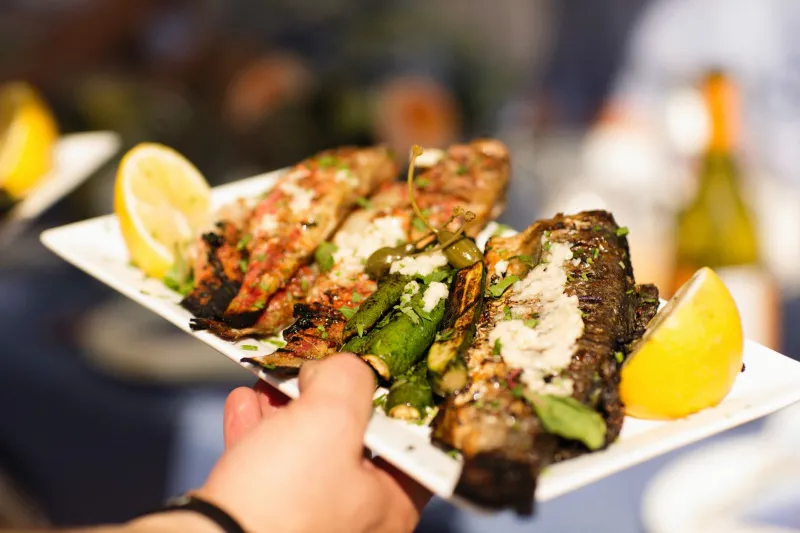
Grilling is probably the most popular method for collars, and for good reason. The high, direct heat chars the exterior while the fat renders and bastes the meat from within. The result is crispy, caramelized edges with juicy, pull-apart flesh underneath.
Season simply — salt, a little oil, maybe some citrus zest or a brush of soy and mirin if you're leaning Japanese. Get your grill hot. Place the collar skin-side down first, let it go for four to five minutes undisturbed, then flip. Depending on size, another three to four minutes should do it. You're looking for the meat to pull away from the bone easily and the exterior to have some char on it. Serve with lemon wedges and don't be shy about eating with your hands — this is that kind of dish.
Pan-Searing
For smaller collars, or when you want more control, a cast iron skillet is your friend. Pat the collar completely dry (this is non-negotiable for a good sear), season well with salt and pepper, and get your pan ripping hot with a high smoke-point oil. Sear skin-side down with firm pressure for three to four minutes, then flip and finish on the other side. A knob of butter and some thyme or garlic in the last minute adds richness without overpowering the fish.
This method works beautifully with snapper or black sea bass collars, which are smaller and cook quickly.
Slow-Roasting
This is the method that really lets the collagen shine. Set your oven to 300°F, season the collar generously, and roast on a wire rack over a sheet pan for 25 to 35 minutes depending on size. The low heat gives the connective tissue time to break down fully, and what comes out is almost confit-like in its tenderness — deeply flavored, falling off the bone, with a silky quality you won't get from high-heat methods.
A miso glaze applied in the last ten minutes of roasting is one of the great combinations in seafood cooking. The fermented saltiness of the miso plays perfectly against the rich, fatty collar meat. It's the kind of thing that makes people stop mid-bite and ask what they're eating.
Eating Your Way to the Bone
Part of the joy of fish collars is that they reward people who eat slowly and attentively. There are pockets of meat tucked into the fin bones, little morsels near the spine, and gelatinous bits near the joint that are extraordinary if you know to look for them. Don't rush. Pick it apart. This is not a cut for distracted weeknight eating — it's for the nights when you actually want to taste what you're cooking.
If you've been buying the same salmon fillet or tilapia portion week after week, fish collars are one of the simplest ways to completely change your relationship with seafood. They're cheap, they're flavorful, they're sustainable in the sense that they make full use of the fish, and they'll make you feel like you stumbled onto a chef's secret.
Because you kind of did.