Stop Chasing Fresh: The Case for Frozen Lobster (and Seafood) You've Been Ignoring
There's a certain kind of food snobbery that gets people into trouble at the seafood counter. It goes something like this: fresh is always better, frozen is a compromise, and anyone who knows anything buys the stuff with the most ice and the shortest journey from the ocean. That logic sounds reasonable. It also happens to be wrong a surprising amount of the time.
Frozen seafood—and frozen lobster in particular—can absolutely outperform its so-called "fresh" counterpart. Not occasionally. Routinely. And once you understand why, you'll never look at that frost-covered bag in the freezer aisle the same way again.
What "Fresh" Actually Means at the Supermarket
Let's start with a little vocabulary lesson, because the word "fresh" is doing a lot of heavy lifting in American grocery stores and fish markets.
When you see "fresh" on a seafood label, it doesn't mean the fish or shellfish was swimming yesterday. It means it hasn't been frozen—at least not commercially. What it doesn't tell you is how many days it spent on a boat, in a truck, at a distribution center, or sitting behind the glass at your local fish counter. Seafood labeled fresh could realistically be anywhere from two to ten days out of the water by the time it reaches your kitchen.
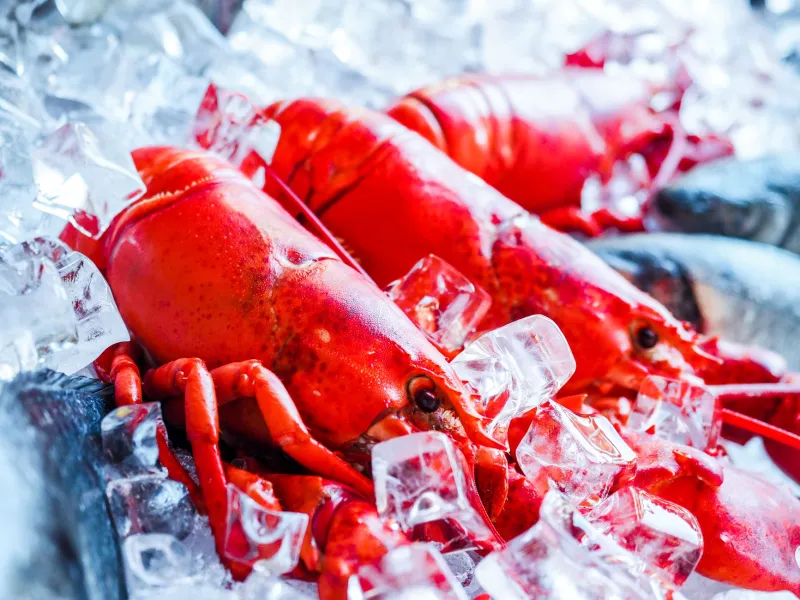
Lobster is a particular problem here. Live lobsters are the gold standard, no question—but those are mostly available near the coast. Once you're in, say, Kansas City or Phoenix, the "fresh" lobster tails at the grocery store almost certainly started their journey frozen and were thawed in the back before being displayed on ice. You're paying a premium for something that's already been through the freeze-thaw cycle once, handled by multiple people, and sitting in the danger zone for bacterial growth.
Frozen-at-sea is a completely different story.
The Science Behind Flash Freezing
Modern flash freezing—technically called IQF, or individually quick frozen—is genuinely impressive technology. Seafood is chilled to somewhere around -40°F within minutes of harvest, often right on the processing vessel. At that speed, ice crystals don't have time to grow large enough to puncture cell walls the way slow freezing does.
This matters enormously for texture. When you freeze something slowly (like in your home freezer), large ice crystals form and essentially shred the muscle fibers from the inside. Thaw it out and you get that waterlogged, mushy texture that gives frozen seafood a bad reputation. Flash-frozen seafood skips that problem almost entirely. The cellular structure stays intact, which means the texture after thawing is remarkably close to what you'd get from truly fresh-off-the-boat product.
For lobster tails specifically, IQF processing locks in sweetness and that characteristic firm-yet-yielding bite. A well-sourced frozen lobster tail, properly thawed, can be genuinely hard to distinguish from fresh in a blind tasting. That's not a bold claim—it's something chefs have known for years.
When Fresh Actually Wins
Fairness requires acknowledging the cases where fresh seafood earns its reputation. If you're within driving distance of a working dock or a reputable fishmonger who gets daily deliveries, live shellfish and day-boat fish are worth the extra effort and expense. Oysters on the half shell, live clams, whole fish bought the same day it was caught—these are experiences that frozen genuinely can't replicate.
The texture of a freshly shucked scallop, for instance, has a sweetness and a silkiness that even the best IQF product approaches but doesn't quite match. Same goes for delicate white fish like flounder or sole, where the difference between fresh and frozen is more apparent.
But here's the thing: most Americans don't live next to a working dock. And for the majority of seafood you're buying at a standard grocery store or even a mid-range fish market, "fresh" is a marketing position, not a factual guarantee of quality.
How to Shop Frozen Seafood Like a Pro
Once you've made peace with the freezer aisle, the next step is knowing what to look for—because not all frozen seafood is created equal.
Check for freezer burn. White, dry patches on frozen seafood mean it's been exposed to air, which degrades flavor and texture. Look for product that's uniformly colored and tightly packaged.
Read the ingredient list. This is the big one. Frozen shrimp, scallops, and lobster are frequently treated with sodium tripolyphosphate (STP), a preservative that causes seafood to absorb water. That water gets released during cooking, which is why your scallops steam instead of sear and your shrimp turns rubbery. Look for products where the only ingredient is the seafood itself, sometimes with just salt.
Know your source. Country of origin labeling is required on most seafood in the US. Spiny lobster from the Caribbean and Maine-sourced lobster tails are generally considered premium. Wild-caught designations matter too—particularly for salmon, shrimp, and lobster.
Look for MSC or ASC certification. These labels indicate the seafood meets sustainability standards, which matters both ethically and practically—well-managed fisheries tend to produce better-quality product.
Buy frozen, thaw properly. The worst thing you can do with frozen seafood is rush the thaw. Move it from the freezer to the refrigerator the night before you plan to cook it. If you're in a hurry, a sealed bag submerged in cold (not warm) running water works in a pinch. Never microwave-thaw seafood you care about.
The Value Equation Nobody Talks About
Beyond quality, there's a practical financial argument for frozen seafood that doesn't get nearly enough attention.
Frozen lobster tails are consistently less expensive than their fresh-labeled counterparts, often by a significant margin. You also get to buy in bulk when prices are favorable and store them until you're ready. There's no pressure to cook something tonight because it's going to turn by tomorrow. That flexibility alone changes how you cook.
For a home cook who wants to eat well without constantly monitoring the fish counter for markdowns, a well-stocked freezer with quality IQF seafood is genuinely liberating. Lobster tails for a Tuesday dinner because you felt like it? That becomes a real option.
The Bottom Line
The fresh-versus-frozen debate in seafood isn't really a debate—it's a context question. Fresh wins when it's actually fresh, meaning caught recently, handled carefully, and sold quickly. Frozen wins when "fresh" is just a label on seafood that's already been through more handling than you'd like to think about.
For lobster especially, a quality IQF tail sourced from a reputable supplier is a smarter buy for most American home cooks than whatever's sitting in the fresh case at a chain grocery store. Learn to read labels, thaw properly, and stop letting marketing make your purchasing decisions for you.
The ocean is generous. You just have to know how to receive what it's offering—whether it comes in a live tank or a vacuum-sealed bag at 40 below.